Window effects#
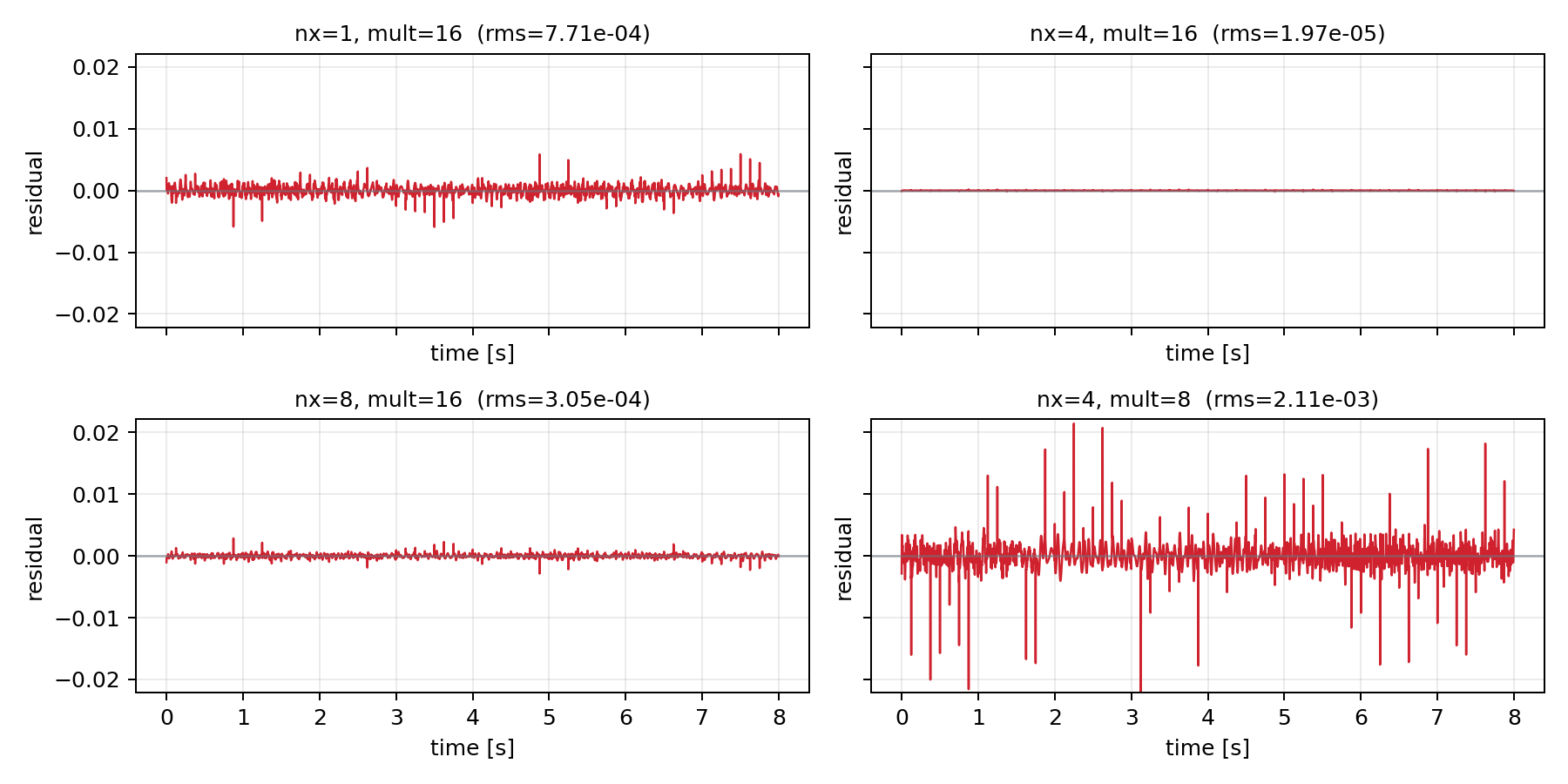
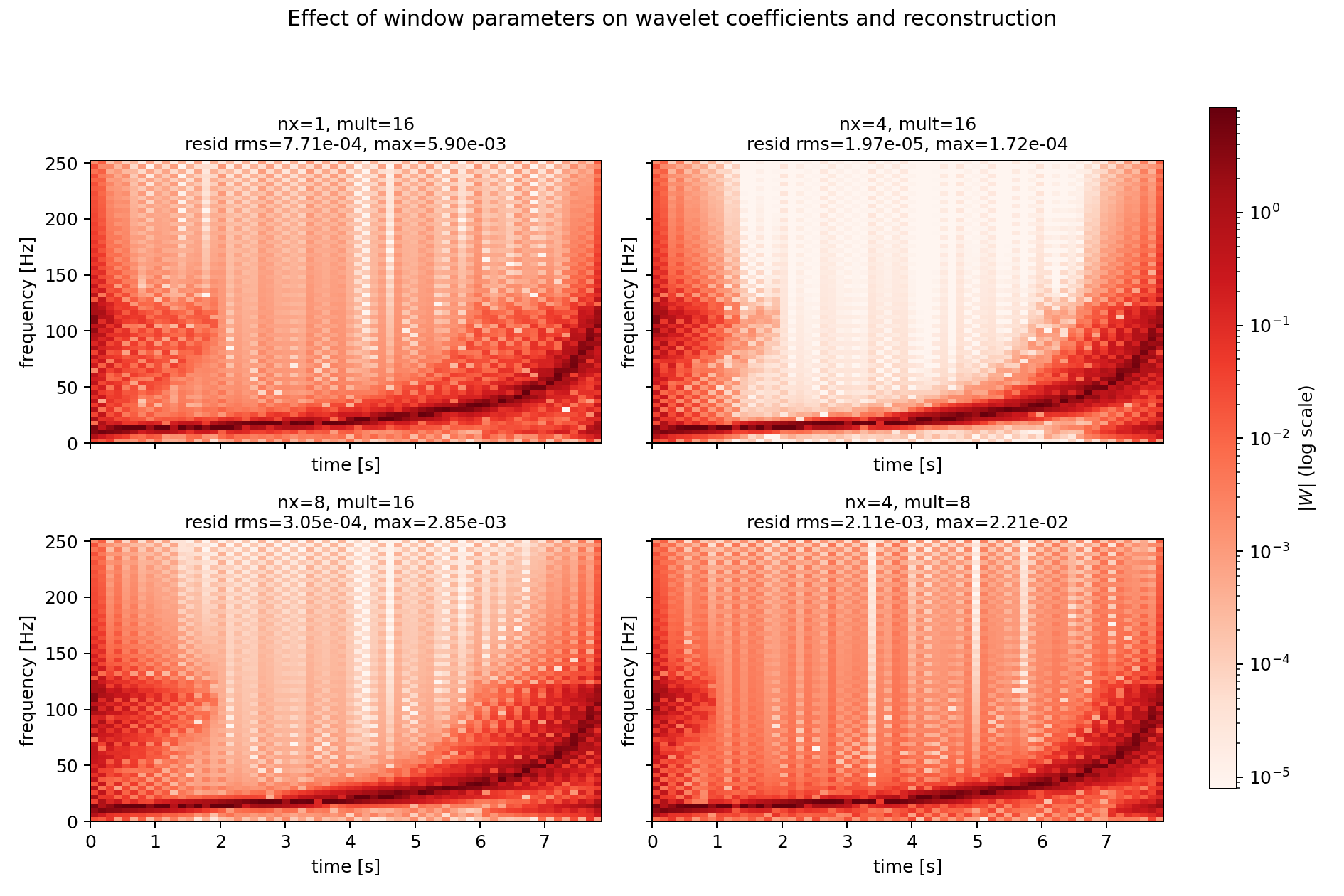
This page shows how the window parameters change:
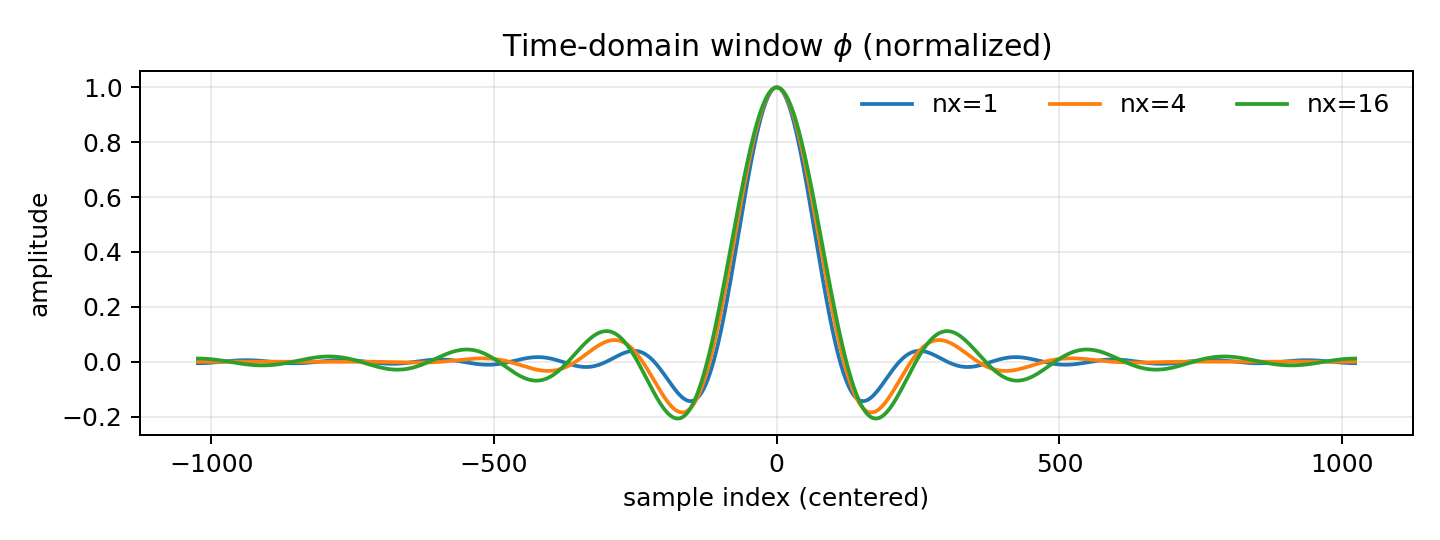
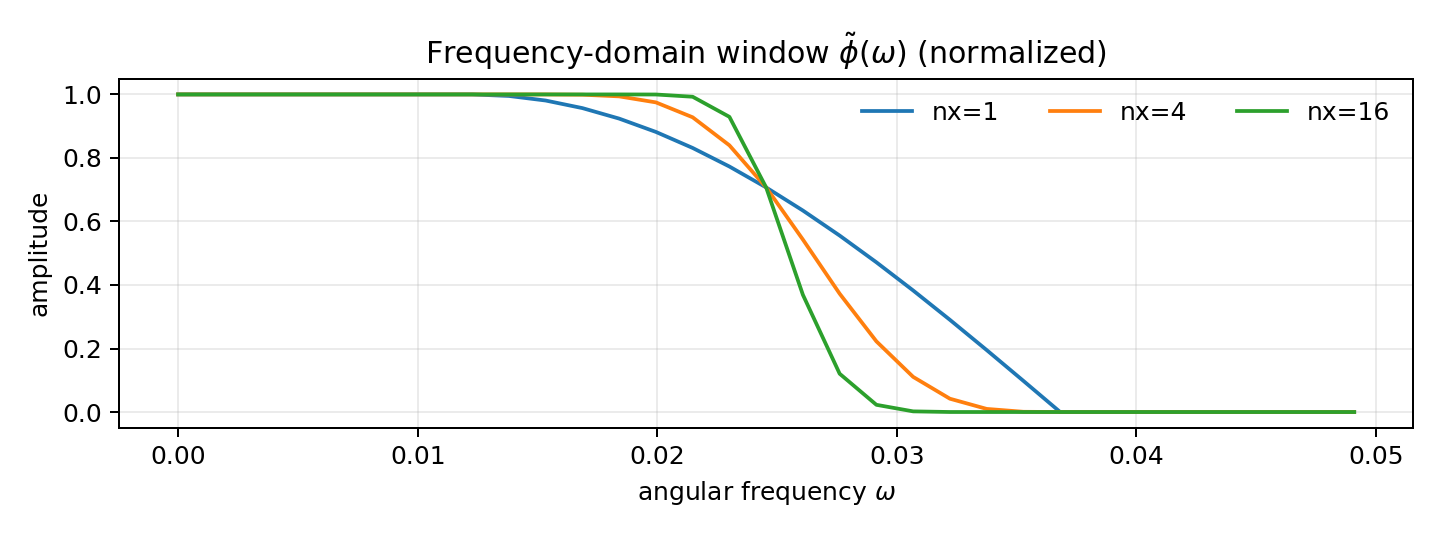
the window itself (
phiandphitilde), andthe resulting time–frequency representation (and reconstruction quality).
If you’re new to the terminology, start with Window function.
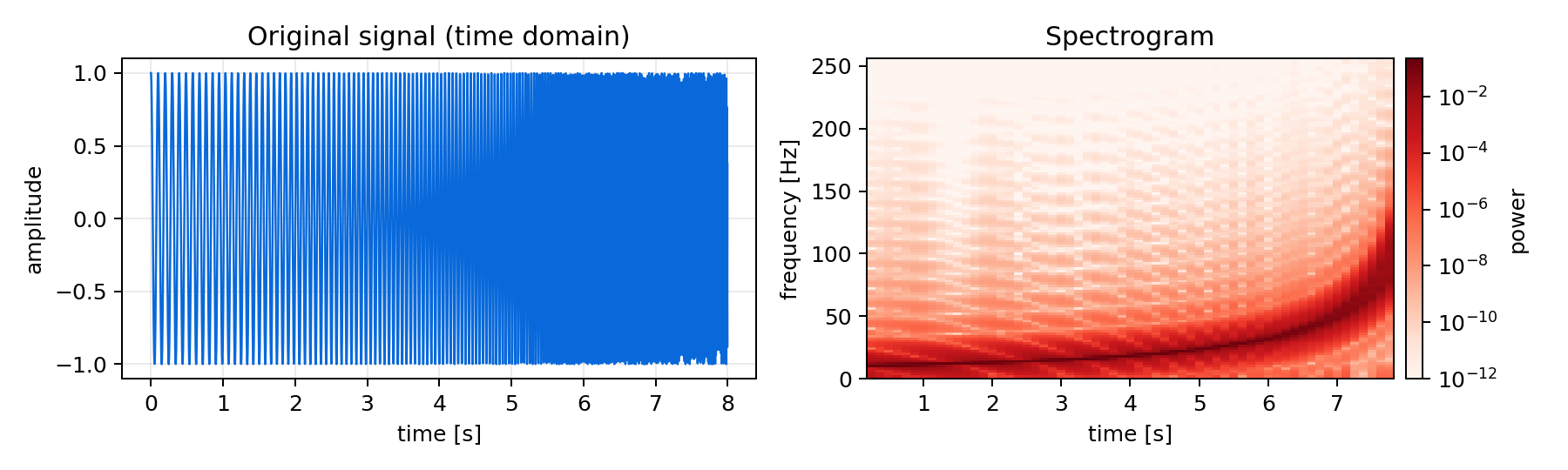
Original signal#
All comparisons below use the same simple chirp-like input.
Packetization animation#
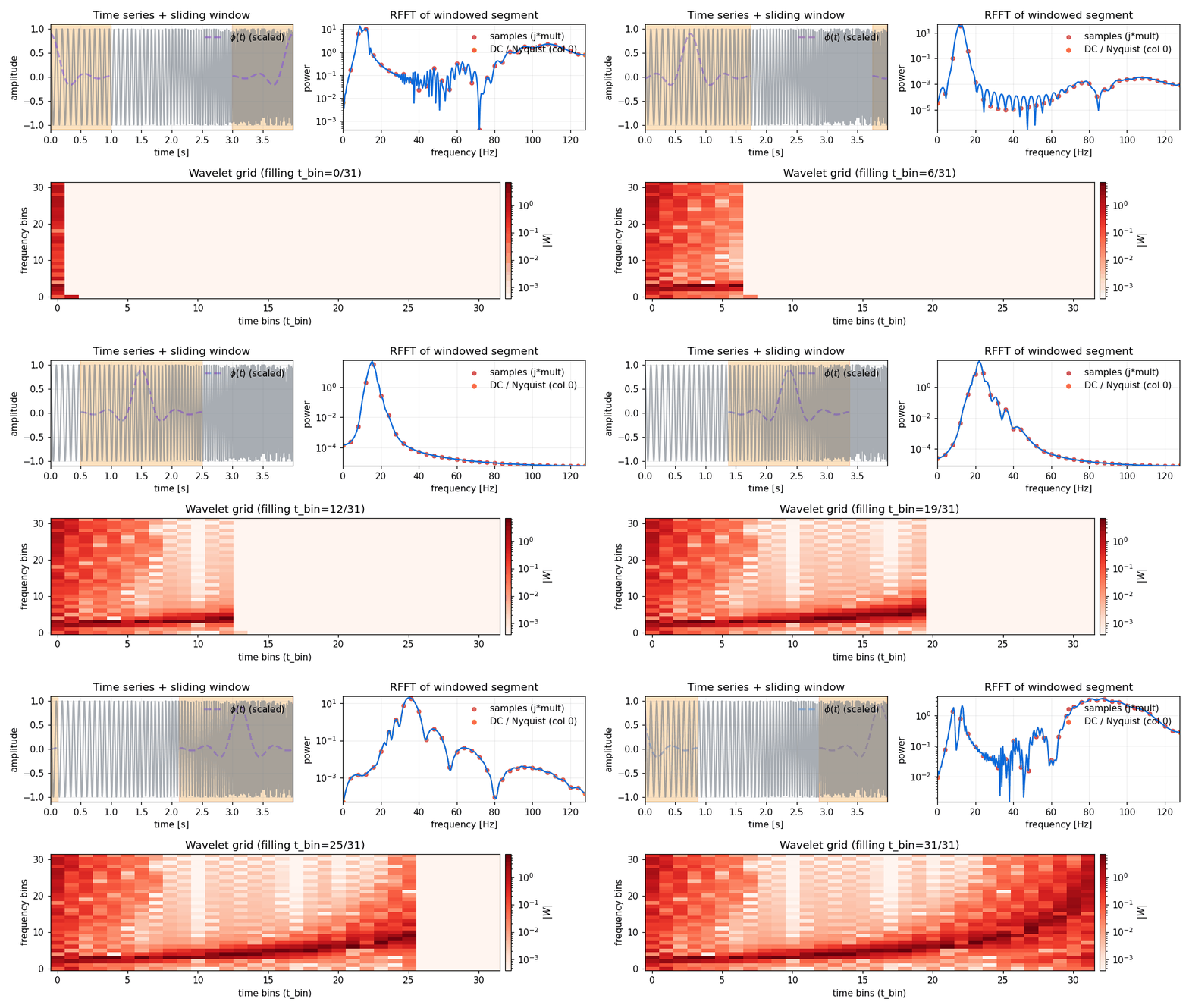
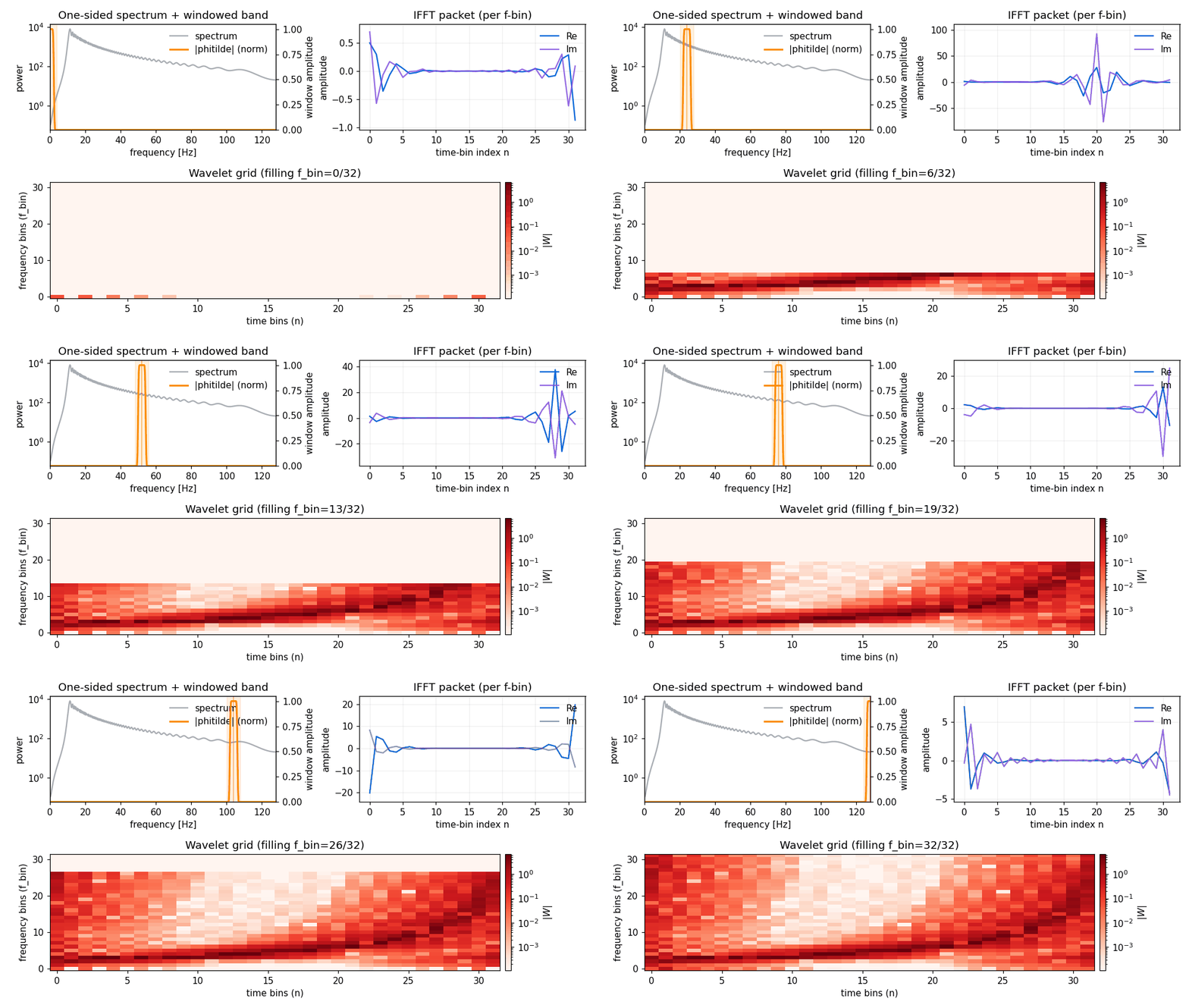
Each time bin corresponds to a windowed slice of the spectrum that is inverse-FFT’d and then packed into a column of the wavelet grid.
Frequency → wavelet intuition#
If you start from a frequency-domain series (from_freq_to_wavelet), you can think of it
as sliding a frequency-domain window (phitilde), inverse-FFT’ing that packet, and then
packing it into the wavelet grid.
What nx changes (shape of the taper)#
What mult changes (overlap/support)#
mult increases the window support length K = 2 * mult * Nf. Larger values usually
reduce leakage and improve reconstruction, at the cost of runtime.