
How it works#
PyWavelet implements the WDM (Wilson–Daubechies–Meyer) style time–frequency transform used in the gravitational-wave literature (see Citing PyWavelet).
At a high level, the transform:
chooses a time–frequency grid (
Nttime bins andNffrequency bins),builds a smooth window function (
phi/phitilde),computes windowed FFT packets per time bin,
packs those packets into a real-valued wavelet coefficient grid.
Grids and shapes#
For a time series with duration T and an Nt × Nf wavelet grid:
delta_T = T / Nt(time-bin size)delta_F = 1 / (2 * delta_T)(frequency-bin spacing)total samples expected by the time-domain transform:
ND = Nt * Nf
The wavelet coefficients are stored as a 2D array with shape (Nf, Nt):
rows: frequency bins
columns: time bins
Forward transform (time → wavelet)#
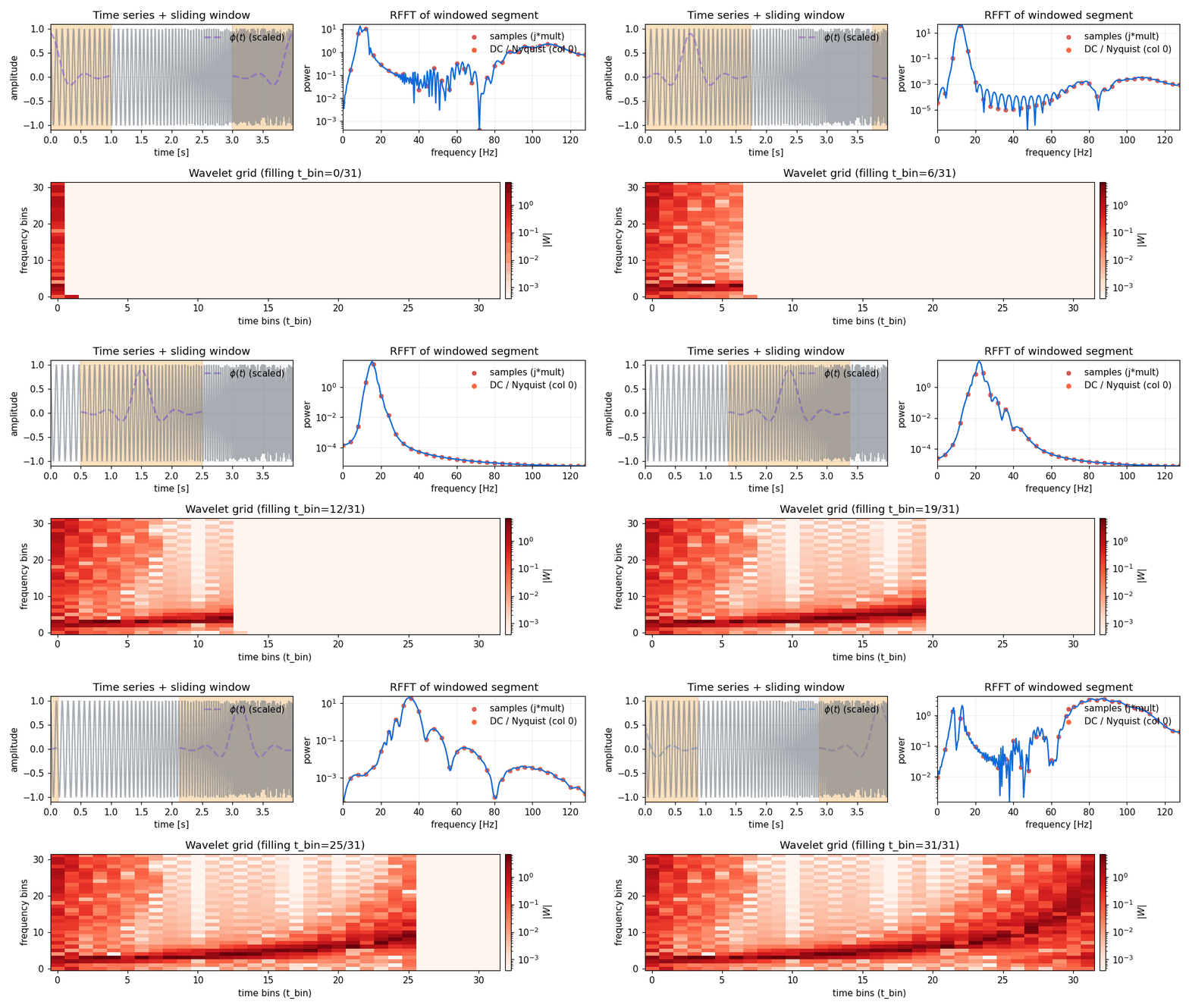
Conceptually (see pywavelet.transforms.from_time_to_wavelet()):
take the 1D signal (length
ND),for each time bin, multiply a local segment by a window
phi,FFT that windowed segment,
pack selected frequency samples into the wavelet coefficient grid.
The parameter mult controls how wide the windowed segment is (and therefore how much
overlap you get between neighboring time bins). See Window function.
Forward transform (frequency → wavelet)#
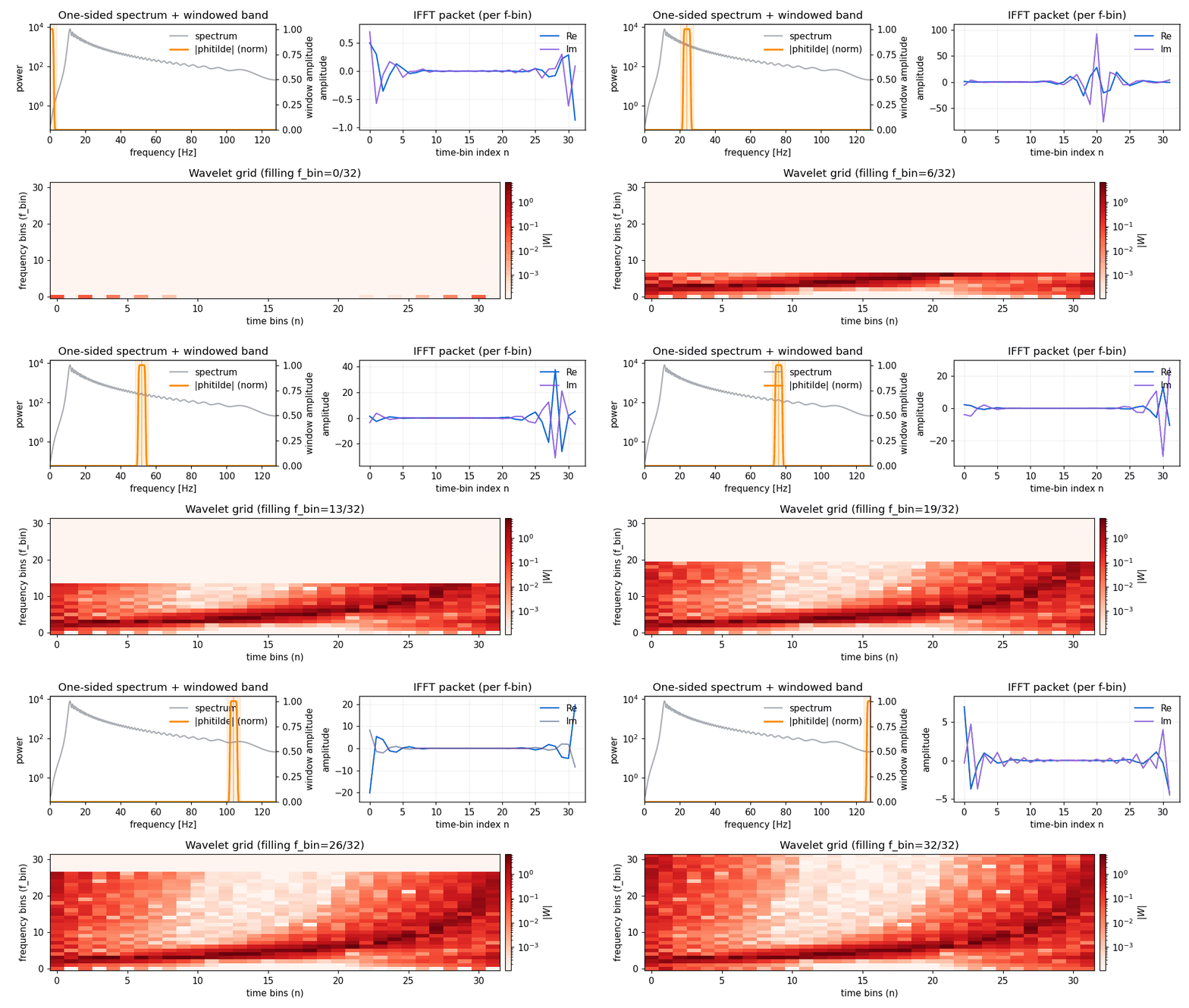
If you start from a frequency-domain series (pywavelet.transforms.from_freq_to_wavelet()), the intuition is similar:
for each frequency bin, take a local band of frequency samples,
taper it with
phitilde,inverse-FFT to get a time packet,
pack real/imag parts into a wavelet grid column using parity rules.
Inverse transform (wavelet → time / frequency)#
The inverse does the reverse packing/unpacking and overlap-add style reconstruction:
unpack each time bin’s packed coefficients,
inverse FFT back to a windowed time segment,
add the contributions back into the 1D output stream.
Where to look in the code#
Grid definitions:
pywavelet.types.wavelet_bins.compute_bins()Window construction:
pywavelet.transforms.phi_vec()andpywavelet.transforms.phitilde_vec_norm()NumPy implementation: